
Intro
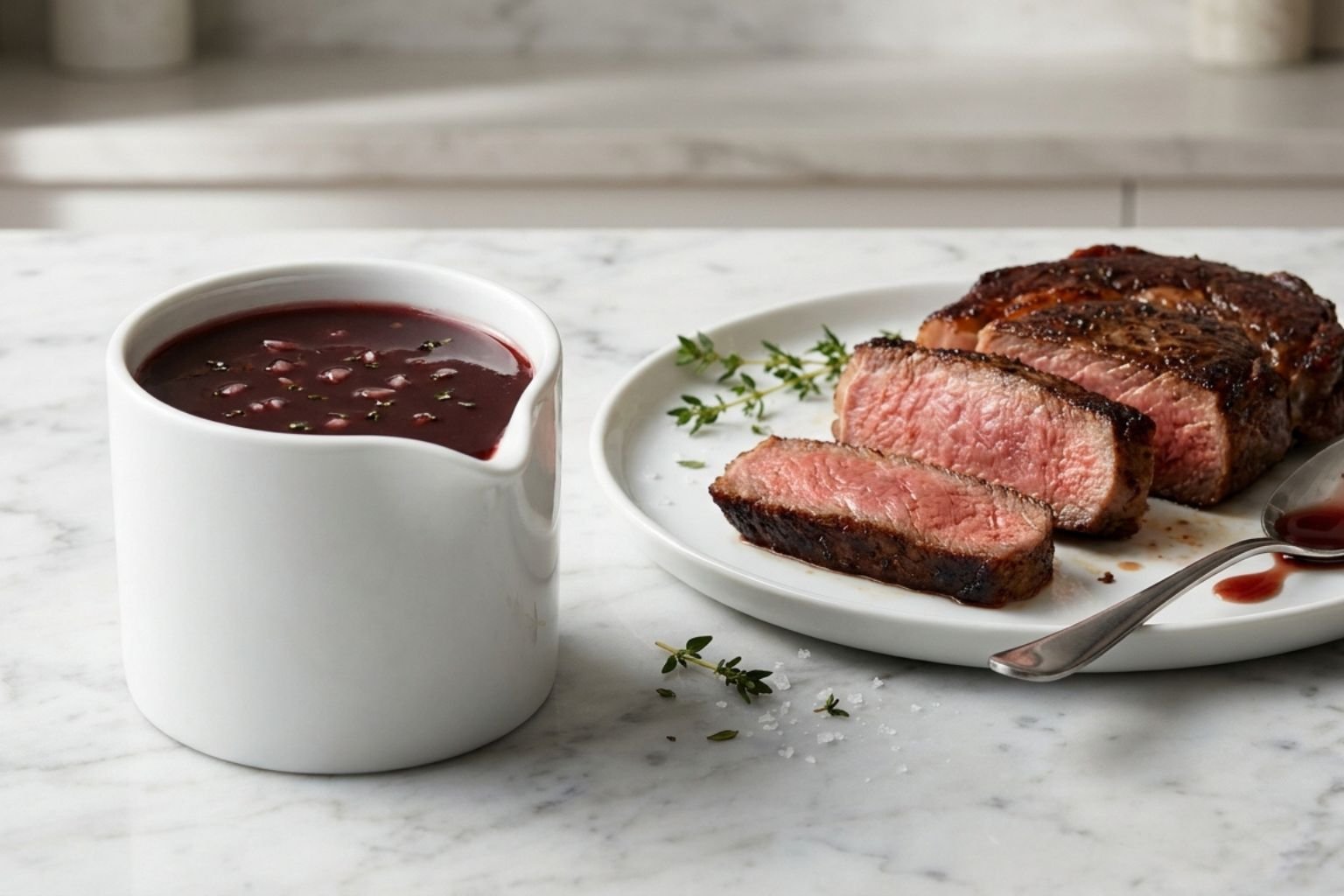
There’s something deeply comforting about standing in a warm kitchen, wooden spoon in hand, slowly stirring a glossy, rich sauce that smells like pure elegance. I still remember the first time I tried making a restaurant-style jus at home—it felt intimidating, almost like stepping into the world of fine dining without a guide. But once I discovered the magic behind a proper gordon ramsay red wine jus recipe, everything changed.
This sauce isn’t just an add-on—it’s the soul of a dish. It transforms a simple steak or roasted chicken into something extraordinary. The deep aroma of red wine, the savory richness of stock, and the subtle sweetness of caramelized aromatics come together in the most beautiful way. And the best part? You don’t need a professional kitchen to make it.
As a home chef who loves bold flavors and comforting meals, I’ve refined this recipe over time to make it approachable yet luxurious. Let me walk you through it step by step, just like I would if we were cooking side by side.
What is Gordon Ramsay Red Wine Jus Recipe?
A red wine jus is a classic French-style sauce made by reducing red wine with stock, herbs, and aromatics until it becomes rich, glossy, and full of flavor. The version inspired by Gordon Ramsay focuses on building layers of taste using simple, high-quality ingredients.
Unlike heavy gravies, a jus is lighter but more concentrated. It’s all about balance—slightly tangy from the wine, savory from the stock, and subtly sweet from vegetables like shallots or onions. When done right, it coats the back of a spoon beautifully and adds depth to any dish it touches.
In this gordon ramsay red wine jus recipe, we’re not rushing anything. We’re letting flavors develop slowly, allowing each ingredient to shine while blending harmoniously.
Equipment List
Before we begin, gather your tools. Nothing fancy—just the essentials:
- Medium saucepan or sauté pan
- Wooden spoon or silicone spatula
- Fine mesh strainer
- Sharp knife
- Chopping board
- Measuring cups and spoons
- Small bowl for butter (optional finishing)
Recipe Card Info
- Prep Time: 10 minutes
- Cook Time: 35 minutes
- Total Time: 45 minutes
- Serves: 4
- Cuisine: French-inspired
- Course: Sauce
- Calories: 120 kcal per serving
Ingredients (with quantities)
- 1 cup (240 ml) red wine (dry, good quality)
- 2 cups (480 ml) beef stock (preferably homemade or low sodium)
- 2 shallots, finely chopped
- 2 cloves garlic, minced
- 1 tablespoon olive oil
- 1 tablespoon unsalted butter (optional, for finishing)
- 1 teaspoon tomato paste
- 1 teaspoon fresh thyme leaves (or ½ tsp dried)
- 1 bay leaf
- Salt, to taste
- Black pepper, to taste
Instructions (Step by Step)
Step 1: Sauté the aromatics
Heat olive oil in a saucepan over medium heat. Add finely chopped shallots and cook gently until soft and translucent. Stir in the garlic and cook for another minute until fragrant.
Step 2: Add tomato paste
Stir in the tomato paste and cook it for 1–2 minutes. This deepens the flavor and gives the sauce a subtle richness.
Step 3: Deglaze with red wine
Pour in the red wine and scrape the bottom of the pan to release all those flavorful bits. Let it simmer and reduce by about half. This step is where the magic begins.
Step 4: Add stock and herbs
Add the beef stock, thyme, and bay leaf. Bring everything to a gentle simmer. Let it cook slowly for about 20–25 minutes until reduced and slightly thickened.
Step 5: Strain the sauce
Remove from heat and strain through a fine mesh sieve into a clean pan. This gives you that smooth, restaurant-style finish.
Step 6: Finish with butter
Return the sauce to low heat and whisk in butter for a glossy finish. Taste and adjust seasoning with salt and pepper.
Why This Recipe Works
What I love about this sauce is how it builds flavor in layers. First, you gently cook the shallots to bring out their sweetness. Then the tomato paste adds depth, almost like a hidden richness that you can’t quite place but definitely taste.
The red wine reduction is where everything transforms. As it simmers, the alcohol cooks off, leaving behind a bold, slightly fruity intensity. When combined with the beef stock, it creates a balance that feels both comforting and refined.
Choosing the Right Red Wine
This is something I get asked all the time. Do you need an expensive bottle? Not at all. But you do need a wine you’d actually enjoy drinking.
A dry red wine like Cabernet Sauvignon, Merlot, or Shiraz works beautifully. Avoid anything too sweet, as it can throw off the balance of the sauce.
Tips for the Best Red Wine Jus
- Always reduce the wine properly—it shouldn’t taste raw or overly sharp.
- Use good-quality stock for the best flavor.
- Don’t rush the simmering process.
- Strain the sauce for a smooth texture.
- Add butter at the end for a silky finish.
What to Serve with Red Wine Jus
This sauce pairs beautifully with so many dishes:
- Steak (especially ribeye or filet mignon)
- Roast chicken
- Lamb chops
- Mashed potatoes
- Roasted vegetables
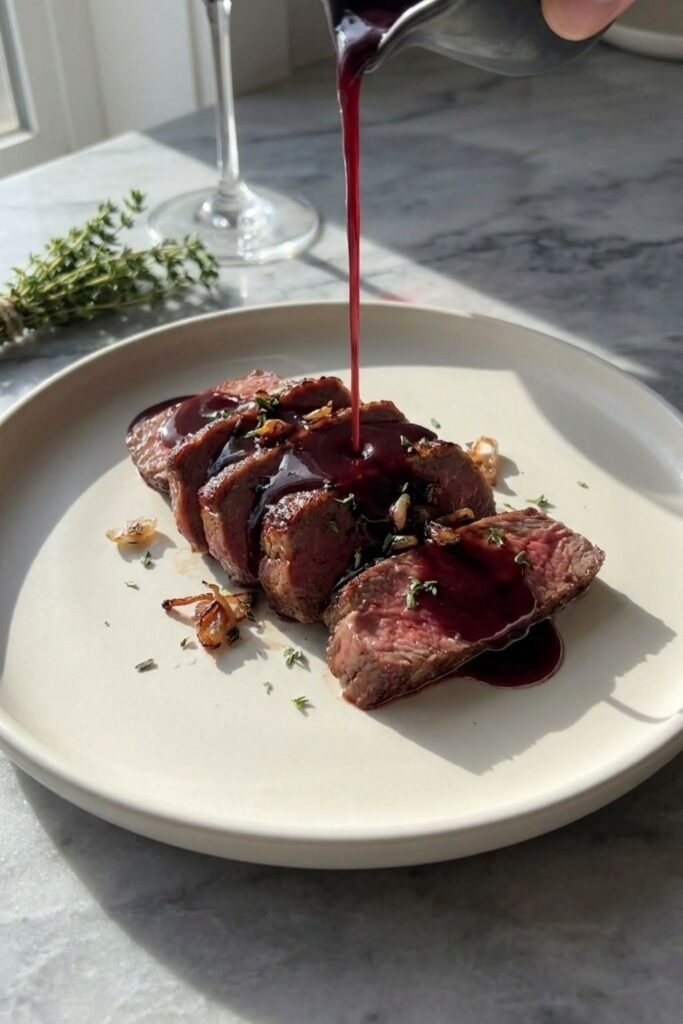
Personally, I love drizzling it over a perfectly seared steak with creamy mashed potatoes—it feels like a restaurant meal right at home.
Variations to Try
With mushrooms
Add sautéed mushrooms for an earthy twist.
With balsamic vinegar
A splash of balsamic adds sweetness and depth.
With rosemary
Swap thyme for rosemary for a more robust flavor.
Storage and Reheating
Store leftover jus in an airtight container in the fridge for up to 3 days. Reheat gently on the stove over low heat.
You can also freeze it for up to 2 months. Just thaw and warm slowly before serving.
Common Mistakes to Avoid
- Using low-quality wine
- Over-reducing the sauce
- Skipping the straining step
- Adding too much salt early on
My Personal Experience
I still remember serving this sauce for a small dinner gathering. I was nervous—it felt like such a simple thing, yet so easy to mess up. But the moment everyone tasted it, there was this quiet pause… and then smiles.
That’s when I realized—good food doesn’t have to be complicated. It just needs care, patience, and a little bit of love.
FAQs
Can I make this without alcohol?
Yes, you can substitute red wine with grape juice and a splash of vinegar, but the flavor will be different.
Can I use chicken stock instead of beef stock?
You can, but beef stock gives a richer flavor.
How do I thicken the jus?
A proper jus thickens naturally through reduction. Avoid using flour or cornstarch.
Can I make it ahead of time?
Absolutely. It actually tastes even better the next day.
What if my sauce is too strong?
Add a little more stock to balance it out.
Final Thoughts
Making this gordon ramsay red wine jus recipe at home is one of those small victories that feels incredibly rewarding. It’s simple, elegant, and endlessly versatile.
Once you master it, you’ll find yourself reaching for it again and again—because a good sauce doesn’t just complement a dish, it completes it.
And honestly? There’s nothing more satisfying than creating something that tastes like it came from a fine dining restaurant… right in your own kitchen.
Gordon Ramsay Red Wine Jus Recipe
Equipment
- Medium saucepan or sauté pan
- Wooden spoon or silicone spatula
- Fine mesh strainer
- Sharp knife
- Chopping board
- Measuring cups and spoons
- Small bowl for butter (optional finishing)
Ingredients
- 1 cup 240 ml red wine (dry, good quality)
- 2 cups 480 ml beef stock (preferably homemade or low sodium)
- 2 shallots finely chopped
- 2 cloves garlic minced
- 1 tablespoon olive oil
- 1 tablespoon unsalted butter optional, for finishing
- 1 teaspoon tomato paste
- 1 teaspoon fresh thyme leaves or ½ tsp dried
- 1 bay leaf
- Salt to taste
- Black pepper to taste
Instructions
Step 1: Sauté the aromatics
- Heat olive oil in a saucepan over medium heat. Add finely chopped shallots and cook gently until soft and translucent. Stir in the garlic and cook for another minute until fragrant.
Step 2: Add tomato paste
- Stir in the tomato paste and cook it for 1–2 minutes. This deepens the flavor and gives the sauce a subtle richness.
Step 3: Deglaze with red wine
- Pour in the red wine and scrape the bottom of the pan to release all those flavorful bits. Let it simmer and reduce by about half. This step is where the magic begins.
Step 4: Add stock and herbs
- Add the beef stock, thyme, and bay leaf. Bring everything to a gentle simmer. Let it cook slowly for about 20–25 minutes until reduced and slightly thickened.
Step 5: Strain the sauce
- Remove from heat and strain through a fine mesh sieve into a clean pan. This gives you that smooth, restaurant-style finish.
Step 6: Finish with butter
- Return the sauce to low heat and whisk in butter for a glossy finish. Taste and adjust seasoning with salt and pepper.

Hi, I’m Isabella Bennett a home cook who believes every meal tells a story. I share simple, delicious recipes made with love, one plate at a time.